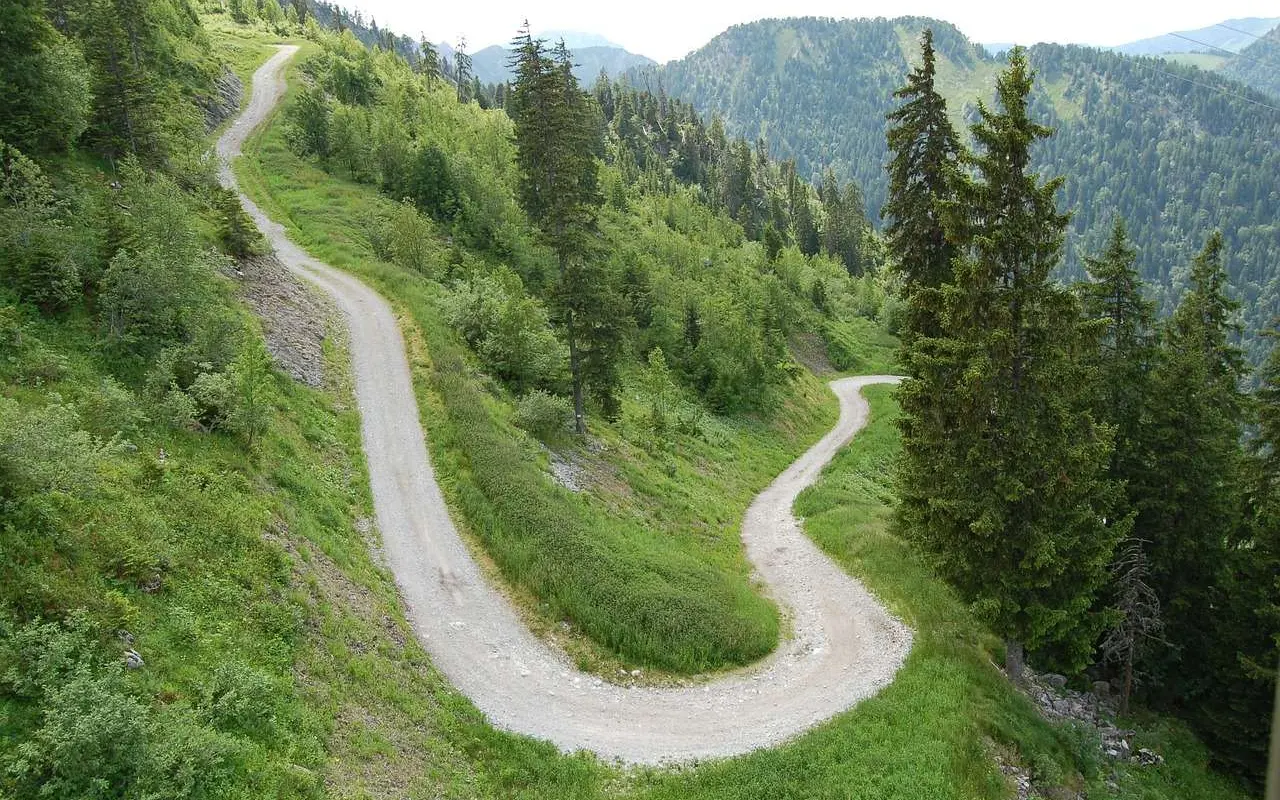
Tight hairpins on a steep hillside can make your stomach drop. Here is how to ride switchbacks: set up wide, brake before the turn, look through to the exit and press into your outside hand.
This guide sits inside our wider collection of mountain bike skills, for riders who want a calm, repeatable method.
| Item | Key fact |
|---|---|
| Where to enter the turn | On the inside, to leave room to get around the outside |
| Where to look | Entrance, middle, then end of the switchback |
| Where to put pressure | On your outside hand |
| Easier direction | Uphill, with less brake control and exposure to worry about |
| Practice ramp size | A 2-3-foot incline to a flat top |
The figures come from evo’s switchback guide and Singletracks’ switchback article. Advice and numbers can change, so check the sources before you rely on them.
Why switchbacks feel so hard
A switchback is a tight turn that reverses your direction on a slope. You have little room, the ground often tilts away, and you must manage speed, balance and line at once.
Most mistakes come from arriving too fast or too late on the brakes. Slow, early and smooth choices solve most of them, and the rest come from where you point your eyes.
Before you ride a corner, stop and read it. Look for the steepest part, any loose or polished surface, and the spot where the trail leaves the turn.
Direction matters. Uphill turns are usually easier because brake control and exposure matter less, while downhill turns demand constant concentration on braking, especially on the side of a mountain.
The good news is that the method is the same every time. Learn the sequence below, then repeat it on easy turns before you try anything exposed.
Set up on the inside
The most surprising habit to learn is to enter on the inside of the corner. It feels backwards, but it gives you the most room to swing around the outside.
The tighter the turn, the further inside you should approach. Many switchbacks also have a berm or bank on the outside, and riding up into it before the turn buys you extra space.
Think of it as drawing a wide arc. You are not trying to cut the corner; you are trying to make the corner bigger.
Step by step through a switchback
- Scan first. Look at the entrance, the middle and the end, so nothing surprises you. Note how steep the slope is and whether the surface is rough or smooth.
- Slow down before the turn. Finish your braking while the bike is still upright and straight, not in the middle of the corner.
- Take your wide line. Set up on the inside, then swing out to give yourself room.
- Look where you want to go. Turn your head through the corner to the exit, not at your front wheel.
- Press into your outside hand. Keep pressure on the outside of the bar, with your elbows bent and your weight centred.
- Roll out and straighten up. Once you can see the exit line, ease off and let the bike carry you out.
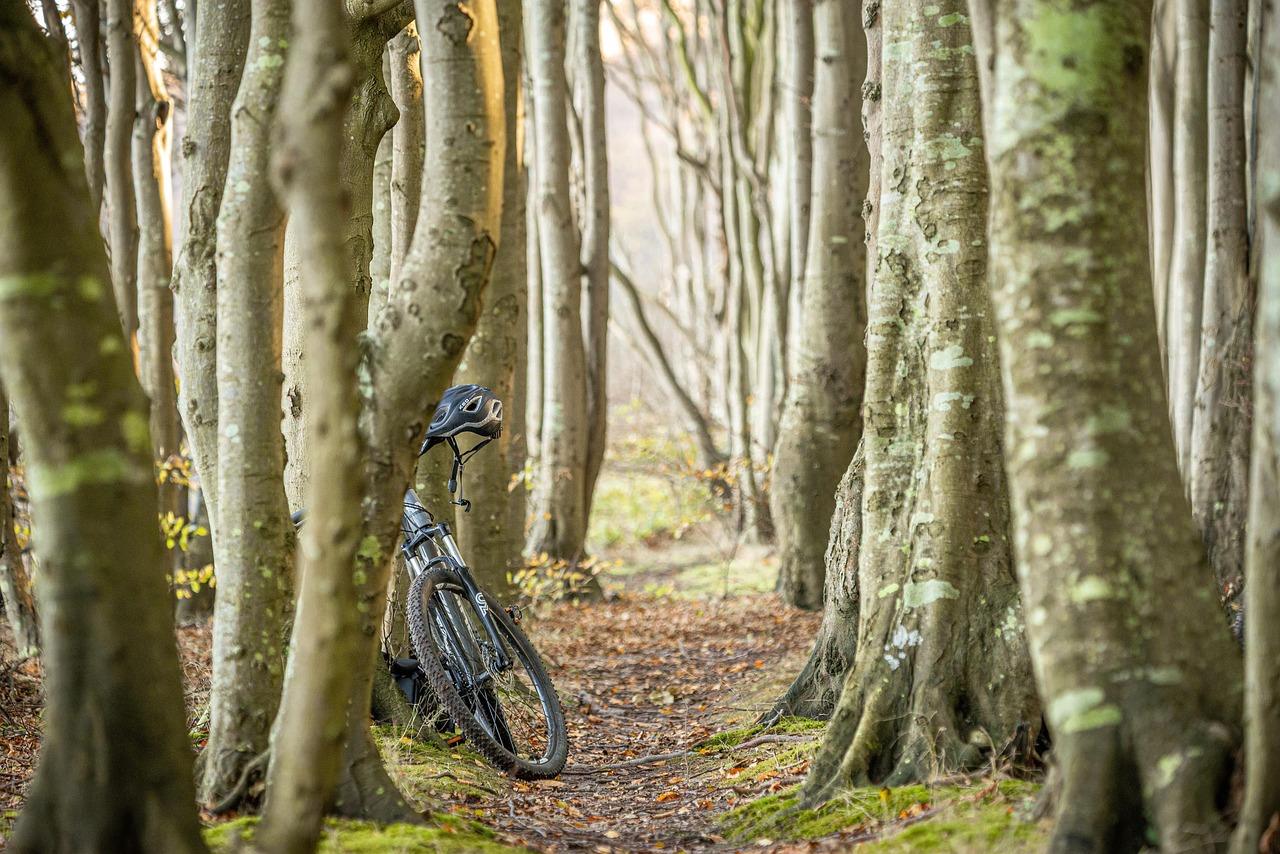
Braking and body position
Think of your hands, hips and feet as separate jobs. Your hands steer and hold pressure on the outside bar, your hips stay loose over the bike, and your feet stay level and weighted so the tyres keep their grip.
If you feel yourself tensing, breathe out and relax your grip. A calm upper body lets the bike absorb small bumps and lets your eyes keep working.
On downhill turns, consistent brake control is the skill that keeps you safe. Smooth, steady pressure beats grabbing the lever halfway through the turn, which can lock the wheel and make it slide.
Keep your hips loose and let the bike move beneath you. Your body stays balanced while the bike leans, and your eyes keep pulling you toward the exit.
Steeper and rougher turns add other challenges. Our guide on how to descend steep trails on a mountain bike covers the stance and braking that make them feel manageable.
If roots, loose rock or ruts sit in the corner, choose your line early. You can read more in our guide to how to ride roots and rocks on a mountain bike.
Common mistakes to fix
- Cutting the corner. Entering tight leaves no room, so you end up stopping or putting a foot down.
- Staring at the front wheel. Your bike follows your eyes, so look at the exit.
- Braking at the apex. Slow down first, then roll through.
- Freezing your arms. Stiff arms stop the bike from moving beneath you. Stay relaxed and let it work.
- Rushing the exit. Wait until the bike is pointed along the new line before you add speed.
A short video of your own riding, filmed from behind or the side, makes these faults easy to spot. Most riders find they look down far more than they thought.
Pick one fault per ride. Trying to fix them all at once usually fixes none.
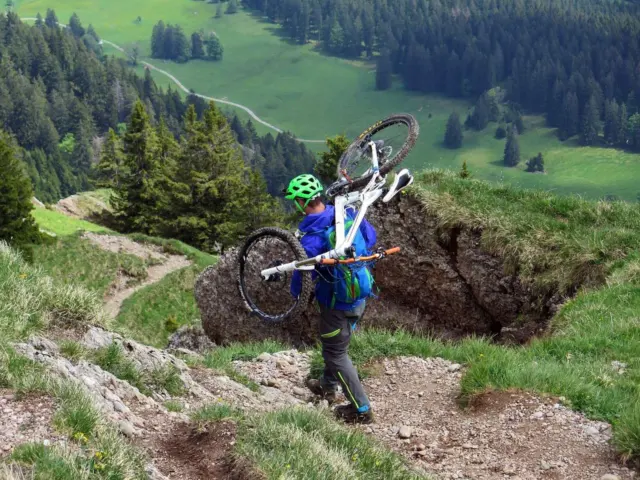
If a corner is beyond you today, walking it is a sound decision. Come back when your braking and vision feel calm on easier turns, and treat each clean corner as proof the method works.
Practising and climbing switchbacks
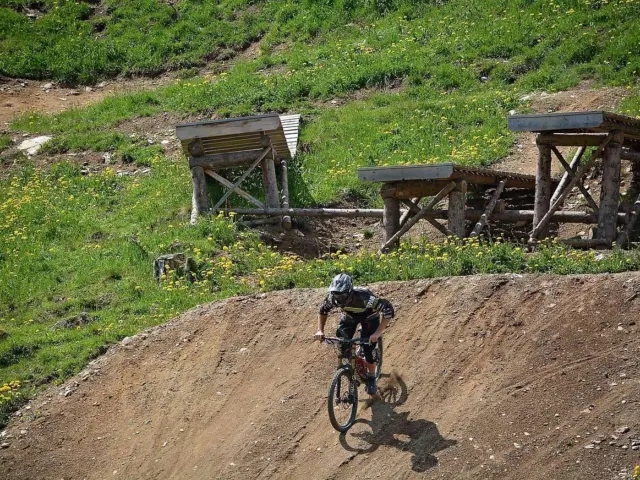
Build the skill on something small first. One coach described the ideal set-up as a flat base with a short incline to a flat top, then riding turns on it while pressing on the outside hand.
Another useful drill is to start in a big, wide turn at speed and then turn tighter and tighter. Add brake control to the drill once the line feels natural.
- Pick one thing per session, such as vision or braking.
- Start on gentle, smooth turns with no steep drop-off.
- Walk a corner if it is beyond you today; that is a sensible choice, not a failure.
- Ride with a friend who can watch your line.
Climbing turns reward momentum. Remember to pedal so you keep it, and keep your chest low so the front wheel stays down.
Even level switchbacks, which look easiest, still ask for balance and a bike that moves beneath a steady body. Treat every turn as a chance to rehearse the same sequence.
Over a few rides you will notice the turns stop feeling like separate obstacles. They become a rhythm of scan, slow, set up wide, look and roll.
Frequently asked questions
Should I brake in the middle of a switchback?
Show answer
Try to do your braking before the turn, so the bike is slowed and upright when you enter. Steady, light control through the turn is fine on a steep downhill, but heavy braking mid-corner can make a wheel slide.
Why enter a switchback on the inside?
Show answer
It leaves you the most room to get around the outside, and the tighter the turn, the more inside you start.
Are uphill switchbacks easier than downhill ones?
Show answer
Usually yes. Uphill, brake control and exposure matter less, while downhill turns demand more concentration.
Where should I look in a switchback?
Show answer
Scan the entrance, the middle and the end before you ride, then keep your eyes on the exit as you turn.