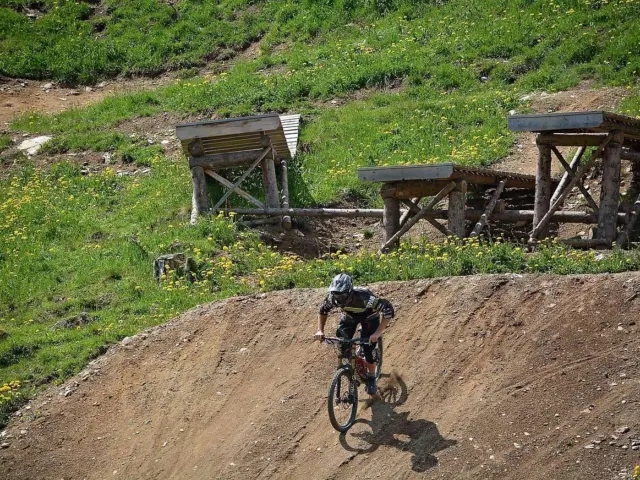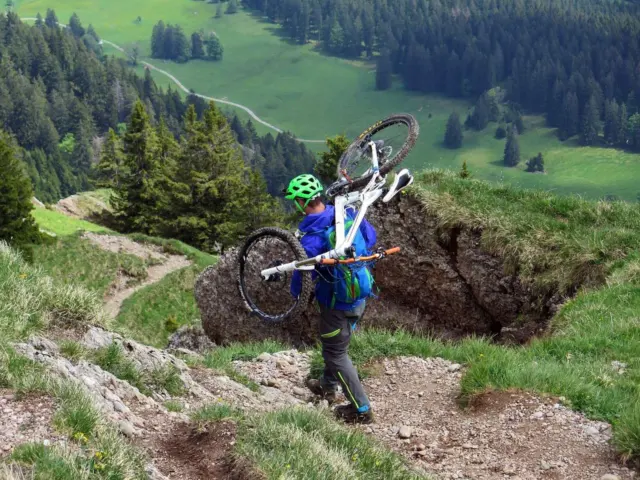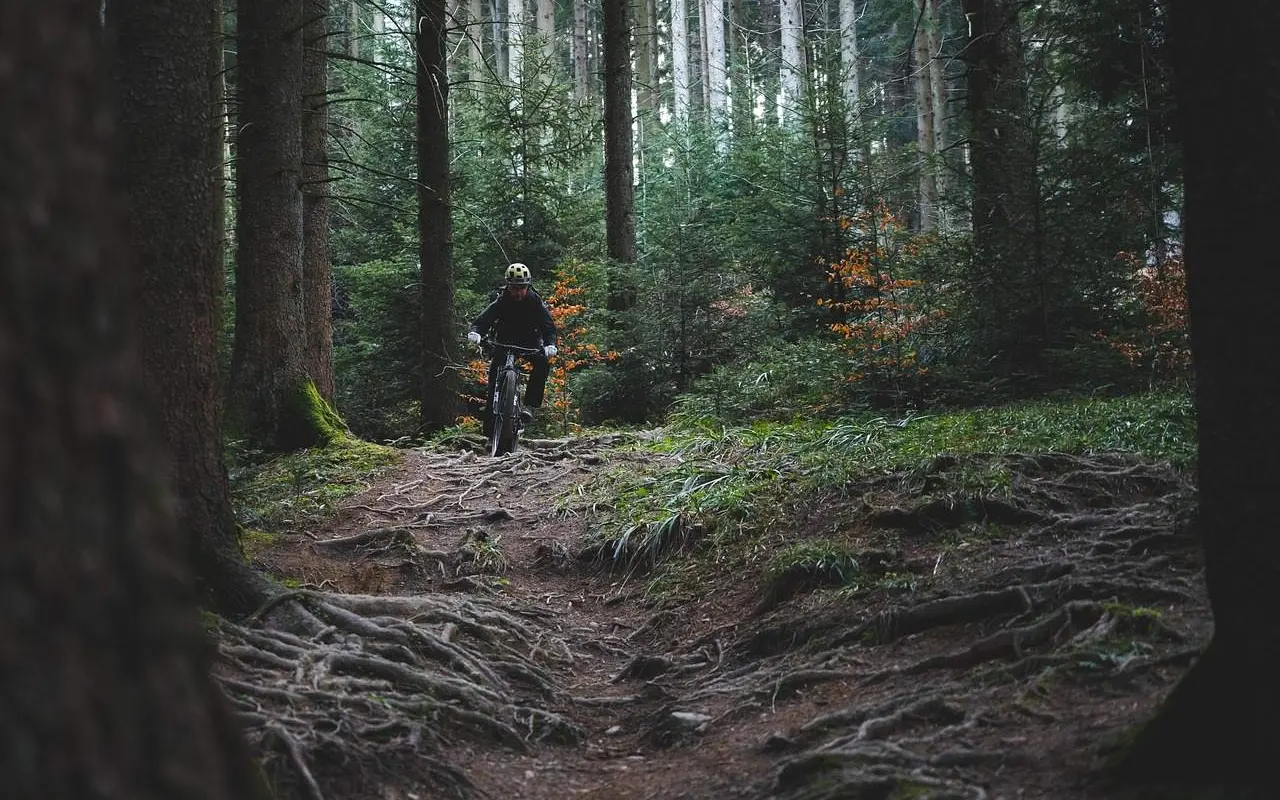
Tangled roots or a rock garden can make any rider tense up. Here is how to ride roots and rocks on a mountain bike: pick a line early, keep your eyes up, stay loose and let the bike move.
This guide is part of our wider look at mountain bike skills.
| Item | Key point |
|---|---|
| Root angle | Hit roots more perpendicular if possible |
| Problem obstacles | Taller and off-angle roots are the disruptors |
| Body position in rocks | Hips down, not back |
| Seat height for rock gardens | Dropper post down before you enter |
| Wet-root suspension tweak | Slow the rebound by a click or two |
These points come from instructor advice reported by Singletracks on wet roots and Singletracks on rock gardens. Advice and bike settings change, so check the sources and your own bike’s manual before you rely on them.
Why roots and rocks feel so hard
If you are new to technical terrain, nerves are normal. Wet or dry, roots can be intimidating, and a rock garden ahead puts many riders on edge.
Roots and rocks are unpredictable. Their uneven surface and odd angles demand precision in form and technique, and wet roots add slipperiness on top.
The good news is that most of the difficulty is decisions made before you arrive. Line choice, speed and body position do more than raw strength or bravery.
Cariboo trails vary a lot with weather and season, so expect the same root to feel different dry and wet. Treat every section as new when conditions change.
Read the line before you reach it
Look ahead and spot the disruptors: the taller, off-angle roots and rocks that can knock your wheel sideways. Plan around them rather than reacting once you are on top of them.
Then choose how you want to meet the obstacle. A useful checklist:
- Pick a line that crosses roots as close to square-on as you can.
- Avoid diagonal roots that steer a tire off the trail.
- If every root is angled or off-camber, consider a high arcing line so a slide still leaves you on the trail.
- Set your gear and speed before the section, not in it.
- Look where you want to go, not at the scariest rock.
One instructor quoted by Singletracks says: “Choose a line that lets you hit the roots more perpendicular if possible.” It is the simplest rule for roots, and it works because your tire is less likely to follow the root away from the trail.
Body position and speed
A calm, athletic stance is the base for everything. Keep your hips down rather than back, elbows and eyes up, back flat, knees bent and out, and feet even.
The aim is bike and body separation. In the words of the Singletracks rock garden piece, it should look as if your body is on a zip line while your arms, legs and bike do the moving.
Smooth momentum generally helps, because a bike rolling with some speed is steadier than one crawling. Avoid grabbing the brakes mid-obstacle, especially on wet roots, where braking can let the tire follow the root rather than your line. Slow down before the section instead.
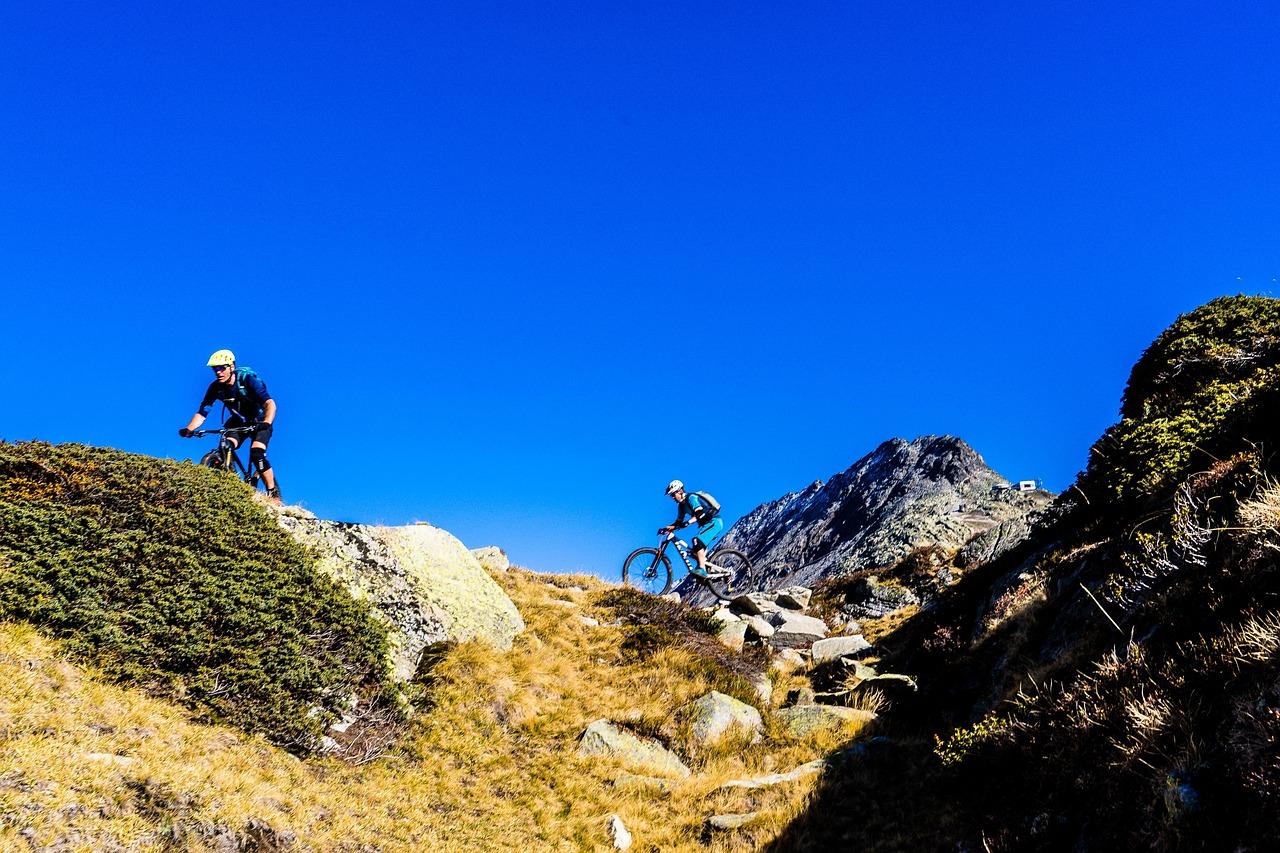
Riding wet roots
The size of the root matters, and so does how many roots are tangled together. A single root is a quick problem; a long web of them means many seconds where your tires have little grip, so plan for the whole stretch and not just the first root.
Wet roots are where most riders slide. Cross them as square as you can, keep the bike upright, stay loose and avoid sudden steering or braking while a wheel is on the root.
Small tweaks to the bike can help too. The instructor in the Singletracks piece suggests that for wet roots, slowing the rebound by a click or two can help some.
If you can bunny hop, you have another option: use an early root as a small “bump jump” to carry over the next ones. That depends on solid basics, so practise on dry, low-risk ground first.
Riding rock gardens
A rock garden is a long run of rocks with no clean path through it, so your job is to stay centred and let the bike work underneath you.
Rock gardens look worse than they ride. The same principles apply: eyes up, loose arms and legs, and a line that avoids the biggest hits.
Before you enter, lower your dropper post, or your rigid seat post, so the bike can move freely beneath you. Make suspension changes in small steps from your baseline settings so you can feel each difference.
Run drills in a controlled, low-risk place before trying a real rock garden. A good drill moves from a high-ready to a low-ready position while keeping your eyes up and your hips going down rather than back.
Common mistakes on roots and rocks
Most trouble comes from a handful of habits. Spotting them in your own riding is half the fix.
- Staring at the obstacle. Your bike tends to go where your eyes go, so look at the exit, not the rock.
- Sitting back with the hips instead of dropping them, which unloads the front wheel.
- Gripping the bars hard and fighting the bike when it slides, rather than letting arms and legs absorb it.
- Braking while a wheel is on a wet root.
- Picking a line too late, so you are steering around a disruptor at the last moment.
Each of these has the same cure: slow down earlier, look further ahead and stay relaxed. Rough terrain rewards a rider who is calm, not one who is rigid.
Bike setup that helps
Skill comes first, but setup supports it. The rock garden instructor says riders should have solid baseline settings before they start adjusting for rocky terrain.
From that baseline, change one thing at a time and ride the same section again so you can feel the result. Small suspension changes are easier to judge than big ones, and you can always return to where you started.
Seat height matters as much as suspension. A lowered post gives you room to move your hips down and back without the saddle in the way.
How to ride roots and rocks step by step
- Practise your stance and weight shifts on flat ground or a gentle slope.
- Roll small, dry roots square-on at a steady pace.
- Add short rocky sections, choosing lines before you roll in.
- Move to wet roots only once dry ones feel dull.
- Walk anything that scares you and come back another day.
Cornering on loose, rooty ground uses many of the same habits, so how to ride switchbacks is a natural next read. Technical riding also tires your legs and grip, which is where mountain bike fitness training pays off.
Frequently asked questions
Should I brake on roots?
Show answer
Try to do your slowing before the roots. Braking on wet roots can make the tire follow the root rather than your intended line.
What is the best angle to cross a root?
Show answer
As square-on, or perpendicular, as you can manage. Diagonal roots are the ones most likely to push your tire off line.
Should I lower my seat for rock gardens?
Show answer
Yes, the instructor quoted by Singletracks suggests riding rock gardens with the dropper post down, or lowering a rigid seat post before you enter.
How do I stop being afraid of rocks?
Show answer
Run drills in a controlled, low-risk environment first, and build up. Confidence follows repetition on easy terrain.