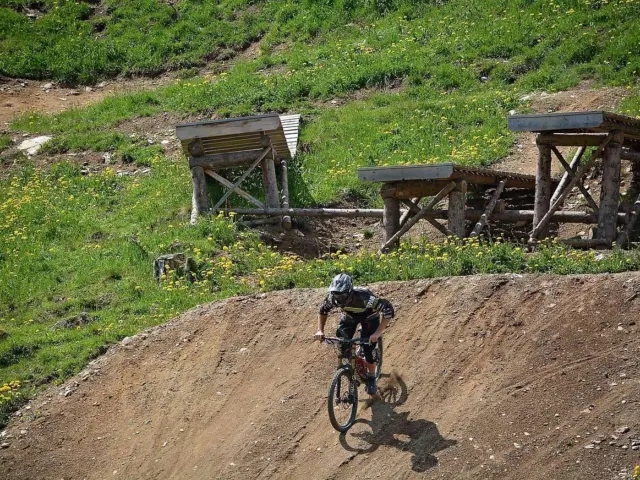
Steep pitches feel scary because the bike wants to run away from you. To learn how to descend steep trails on a mountain bike, stay low, keep your weight neutral, and brake early and smoothly.
| Item | Value |
|---|---|
| Body position | Stay low, head over the bars and stem |
| Weight | Keep it neutral, not hung far back |
| Main challenge on steeps | Acceleration |
| Braking goal | Brake as much as you can get away with to keep speed consistent |
| Speed management | You can always add speed by braking less |
These points come from MBR’s guide to steep trails. Advice changes between coaches and over time, so check the source before you rely on it.
Why steep trails feel so different
On flat or rolling ground, gravity is a background player. On a steep pitch it takes over, and acceleration is the scary part. MBR describes it this way: “The scary thing about riding on steeper terrain is the acceleration.”
Roots, rocks and loose dirt make it harder, because grip is limited while the pull of the hill is high. Cariboo trails often mix both, so your plan has to cover speed and traction together.
The good news is that most of the work is calm, repeatable technique. If you also want to see the other half of the hill, our guide on how to climb hills on a mountain bike covers going up.
Get your body position right
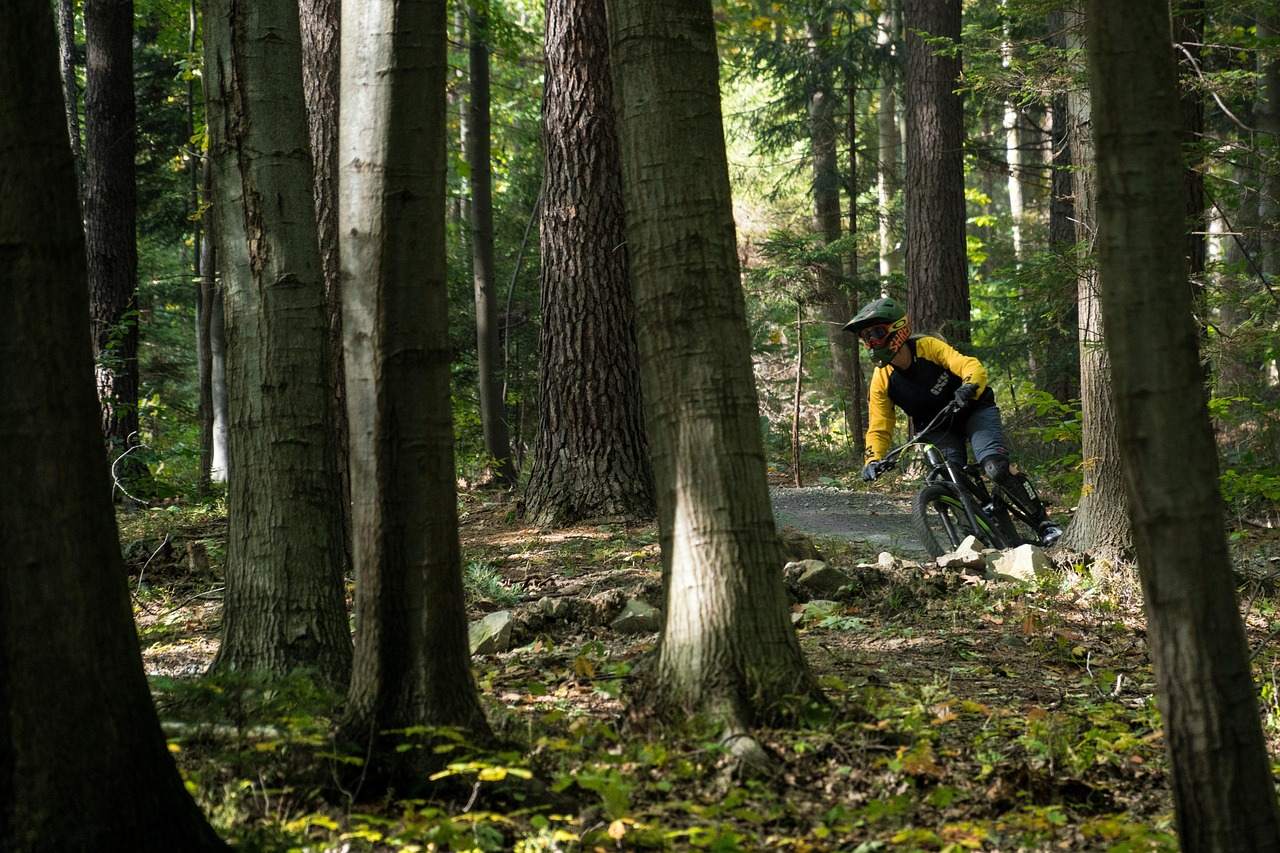
The foundation is to stay low. MBR’s advice is to “stay low and keep your head over the bars and stem” so your body stays isolated from what the bike does beneath you.
Use this checklist before you drop in:
- Bend your elbows and knees so your arms and legs can act as suspension.
- Keep your head up and over the bars and stem.
- Drop your heels and stand on level pedals.
- Hold the bars firmly but not in a death grip.
- Leave room to move: if you are fully stretched out, you have nowhere to go when the bike drops.
Range of motion matters. When your elbows are bent and your hips can move, you can absorb a sudden slide or drop without being thrown off balance.
Should you really keep your weight back?
Many riders hear “get your weight back” and shove their hips behind the saddle. MBR calls out this question directly and prefers a neutral position instead.
The problem with hanging far back is that it limits your range of motion and can unload the front wheel, so it slides. A hips-back shift is useful on the steepest pitch, but treat it as a small adjustment and not a fixed position.
A simple test: if you cannot move forward or backward quickly, you are too static. Practise on a moderate slope and find the spot where the bike feels balanced beneath you.
Control speed with smart braking
Braking on a steep is about managing the bike, not stopping it. MBR puts it plainly: “even braking as much as you can get away with will only keep your speed consistent.”
That means you should accept a little speed and focus on control. The same source reminds you, “You can always add speed by braking less.”
- Scrub speed early, on the approach, while the trail is still easy.
- Use smooth, steady pressure instead of grabbing the levers.
- Keep your eyes on the exit of the steep, not on the front tire.
- Ease off the brakes as you commit, and let the wheels roll over the obstacles.
Locking a wheel is the thing to avoid. A skidding tire gives up grip, and you lose steering or stability. Release a little, then reapply.
Build confidence step by step
Confidence on steeps is earned with repetition on easier terrain. MBR advises patience: “Take your time and be patient on the way in.”
Here is a practical way to progress:
- Start on a short, smooth, grippy slope with a flat run-out.
- Ride it slowly and notice where your weight sits and how the brakes feel.
- Try again with slightly less brake, only when you feel in control.
- Move to rougher or longer pitches once the smooth ones feel boring.
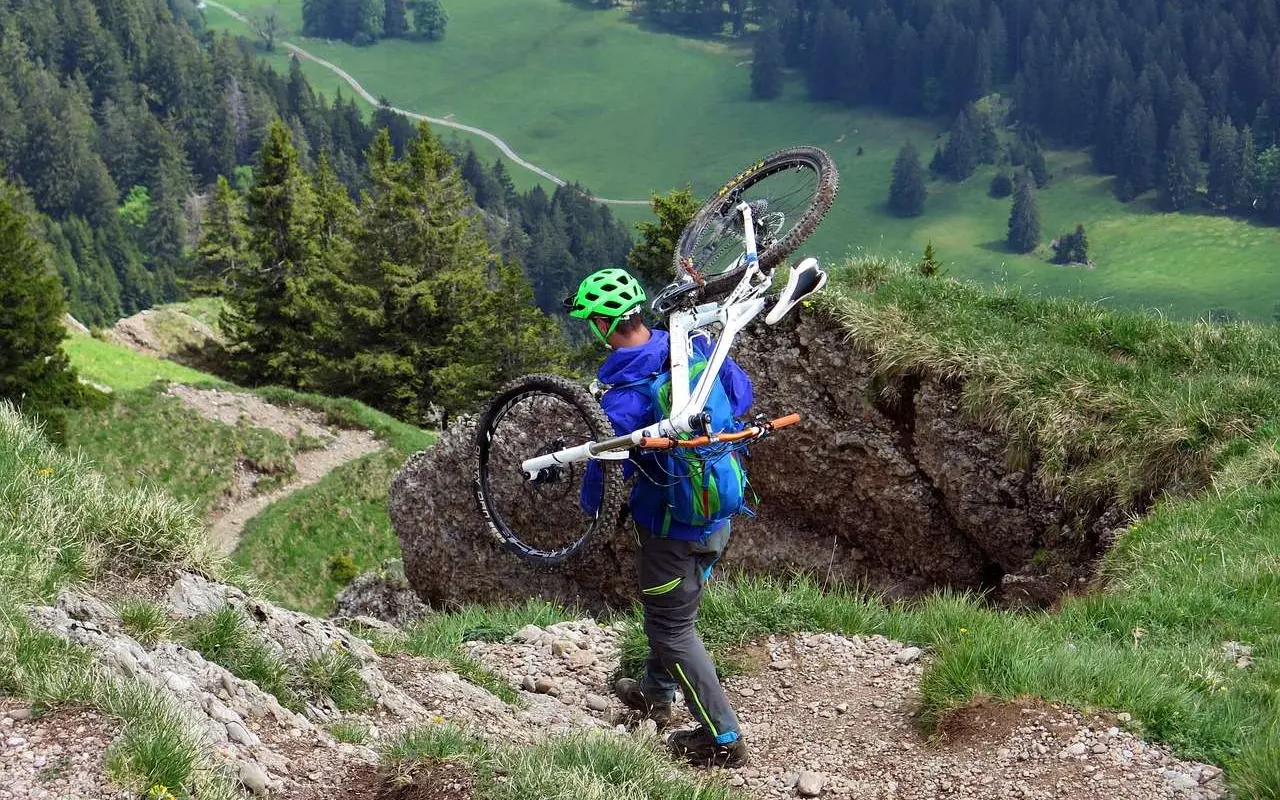
- Walk a section whenever it is beyond your skill today. That is a good decision, not a failure.
Steep trails often have tight turns too. Our notes on how to ride switchbacks help when the hill bends back on itself.
How to descend steep trails with a calm routine
A repeatable routine keeps nerves from making decisions for you. Run the same short sequence at the top of every steep pitch, and it soon becomes automatic.
- Stop and look at the whole pitch, from the entry to the run-out.
- Pick a line that avoids the loosest dirt and the biggest roots.
- Decide where you will brake and where you will let the bike roll.
- Get low, bend your elbows and knees, and drop your heels.
- Roll in slowly, look ahead, and keep your braking smooth.
Looking where you want to go matters more than most riders expect. If you stare at the one scary rock, your hands tend to steer toward it.
Common mistakes on steep descents
Most problems come from a few habits. Spot them early and you can fix them with practice rather than courage.
- Locking the rear wheel: a skidding tire loses grip and sends you sideways.
- Straight arms: with no bend in your elbows, every bump goes straight to your body.
- Sitting on the saddle: it blocks your hips and limits how much you can move.
- Braking late: grabbing the levers mid-obstacle upsets the bike when it needs to roll.
- Staring at the front tire: you react late to whatever comes next.
When you do get a scare, take it as feedback. Note what happened, go back to an easier slope, and rehearse the one fix that applies.
Mindset and rest between pitches
Fear narrows your attention and tightens your muscles. A tense rider rides stiffly, and a stiff rider is easier to throw off line.
Take a slow breath at the top, relax your shoulders, and soften your hands before you roll in. Between pitches, pull over at a safe spot to shake out your arms and fingers, because tired forearms make braking harder to control.
Riding with friends who are patient helps too. Watching a trusted rider pick a line shows you what is possible, and you can choose to follow or to walk it.
Keep the rest of your skills in view
Descending is one piece of a bigger set. Cornering, line choice and balance all feed into it, and you can browse them in the mountain bike skills hub.
Check your bike as well. Brakes should be bedded in and working, and your tires and suspension should suit the trail. Before riding anything steep, confirm the local trail conditions and any closures, and wear a helmet and gloves.
Frequently asked questions
Should I use the front brake on steep descents?
Show answer
Yes, but smoothly. Use both brakes with steady pressure, and release a little if a wheel starts to skid. Practise on easy slopes to learn how much each brake can give.
Do I need to lean back on steep trails?
Show answer
Not far back. MBR recommends keeping your weight neutral and staying low, with your head over the bars and stem, so you keep range of motion.
Why do steep trails scare me so much?
Show answer
The speed builds fast, and grip can be limited on roots and loose ground. Slow practice on easier slopes and a clear braking plan make it feel far more manageable.
Is it fine to walk a steep section?
Show answer
Yes. Walking a pitch that is beyond your current skill is a sound choice, and you can come back to it as your confidence grows.