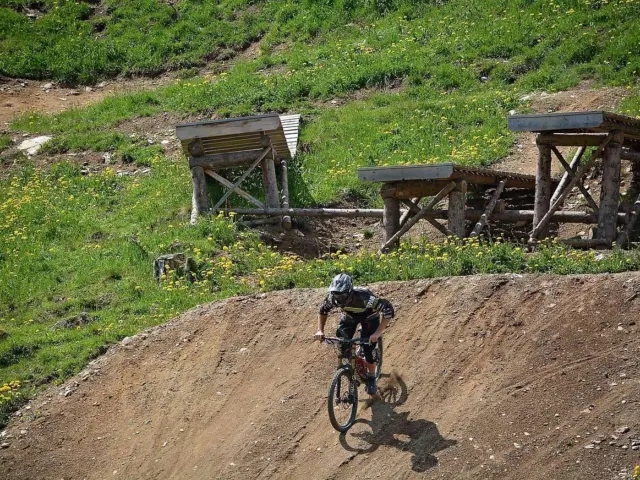
Worried the trail will wash out your front wheel? Here is how to corner on a mountain bike: sort your speed first, look through the turn, stay low, and lean the bike under you.
| Item | Value |
|---|---|
| Coaching cue for flat turns | “Look, Low, and Lean” |
| When to brake | Before committing to the turn |
| Where to look | Through the turn, toward the exit |
| Outside foot | Extra pressure, but not all of your weight |
| Pedals in a long, steep berm | Level |
These cues come from Singletracks and off-road.cc. Coaching advice can change, so check the sources before you rely on them.
Cornering is one of the core mountain bike skills, and it rewards slow, deliberate practice. This guide covers the basic sequence, foot and body position, and how berms differ from flat turns.
The basic sequence: look, low, lean
Coach Karen Brooks drills the approach with the phrase “Look, Low, and Lean”, as Singletracks describes it. Each word is one job, and you do them in order.
- Sort your speed. Proper speed is crucial to making it through the turn.
- Look. Find the apex while you are still braking, then keep your eyes on the exit.
- Low. Bend your knees and elbows and keep your weight low.
- Lean. Tilt the bike to the inside while your body stays centred over the cranks.
Leaning the bike lets the outer knobs of your tyres dig in for traction. That is why the bike leans more than you do.
Brake before the turn, not in it
Having your braking sorted out before committing to the turn is best, according to Singletracks. Braking mid-corner asks the tyres to slow you and turn you at once, and that is when they let go.
Scrub speed in a straight line, release the brakes, then roll in. For lever technique, see our guide on how to brake on a mountain bike.
Where your eyes go
Singletracks puts it simply: “Look where you want to go, not where you don’t want to go.” Brooks tells clients they are drawing a line with their eyes for the wheels to follow.
Spot the apex while braking, then turn your head toward the exit. If you stare at the ditch or the tree on the outside, your bike tends to head there.
Foot pressure and body position
As evo’s cornering guide explains, turning on a mountain bike means more pressure on the outside foot, as in skiing. It also warns against going too far, because 100% of your weight on the outside foot will stand the bike up and make it hard to lean.
Instead, transfer weight toward your outside foot as the bike tips into the turn. Singletracks adds that pulling up on the outside of the handlebar helps keep the bike leaning.
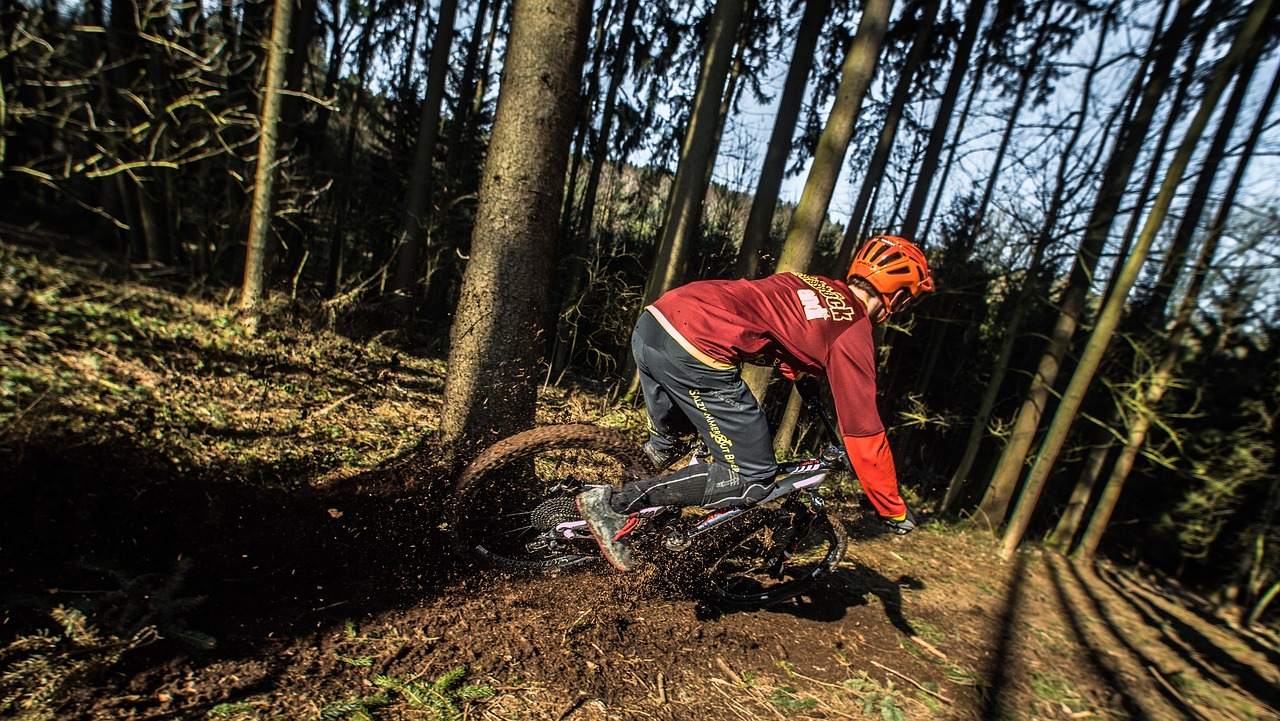
A sound base position makes all of this easier. Our page on mountain bike body position covers the stance you start from.
Berms versus flat turns
Berms are built to allow riders to corner without losing speed, says off-road.cc. How you set your pedals depends on how steep the banking is.
- Flat or subtly banked corners: shift weight onto the outside pedal, which should be in the lowest crank position.
- Long, sweeping berms with steeper banking: ride with level pedals, since the ground stays somewhat perpendicular to your tyres.
- Either way: drop your dropper post and stay low in the attack position.
Riders with a low centre of gravity tend to have more control in corners, per the same source. Level pedals on a big berm use the full contact patch of the tyres.
Common mistakes and quick fixes
Most cornering trouble comes from one of a few habits. Each has a simple fix drawn from the sources above.
- Braking too late: the fix is to finish braking before you commit, so the tyres only have to turn. Singletracks says to have braking sorted out before the turn.
- Staring at the ground in front of the wheel: lift your eyes to the apex, then the exit, because the bike follows your gaze.
- Standing the bike upright: if you load the outside foot completely, evo warns the bike stands up and is hard to lean.
- Stiff arms and legs: bend your knees and elbows so the bike can move beneath you while your body stays centred over the cranks.
- Entering too fast: proper speed is crucial, so slow down first and add speed once the turn feels calm.
Fix one habit per ride rather than all at once. Changing a single cue is easier to feel and easier to repeat.
How to corner on a mountain bike when the turn tightens
Tight corners and switchbacks use the same ideas with less room. Speed matters even more, since there is little space to recover from a mistake.
Start by braking earlier than feels necessary and picking the apex while you slow. Then keep your head turning toward the exit so your hips and shoulders follow, rather than waiting until the bike is already pointing the wrong way.
Keep your weight low and centred, and press the outside foot as the bike tips in. If the corner is flat, a dropped outside pedal at the bottom of the stroke is the standard approach described by off-road.cc.
When a corner scares you, practise it slowly several times. Singletracks advises beginning slow with any new skill and building speed as confidence grows.
Why the outside foot matters
The evo guide explains that stepping off the outside foot is what turns the front side of the human body. Offsetting your foot heights effectively turns your hips, and the hips lead the bike.
The same guide notes that an elbow lifted during the outside-foot rotation lets the shoulders turn with the hips. This is a small detail, but it is what keeps your upper body from fighting the bike.
Think of it as a smooth handover. Your weight moves toward the outside foot as the bike tips in, rather than arriving all at once on entry.
A simple checklist for every corner
Run through the same short list on approach until it becomes automatic. Keeping it consistent helps you spot which step went wrong when a corner feels bad.
- Pick your speed and finish braking while the bike is still upright and straight.
- Spot the apex, then turn your head to the exit.
- Drop into a low, balanced stance with bent knees and elbows.
- Decide on pedals: outside foot low for flat turns, level for long, steep berms.
- Tilt the bike, keep your body centred, and press the outside foot.
- Look farther ahead as you exit and ride into the next section.
None of these steps needs strength. They need timing, and timing comes from repeating the same corner until each step lands in the right place.
If a step keeps going wrong, slow the whole thing down. Dropping speed gives your eyes and hands time to catch up, and then you can build back up gradually.
Practising safely
With all-new skills, riders should take their time, begin slow, and build speed as confidence grows, per Singletracks. Pick a wide, empty corner and ride it repeatedly.
A short routine makes practice measurable. Ride the same corner each lap and change only one thing at a time.
- Run it once with your outside pedal down, then once with pedals level, and notice the difference.
- Keep the same braking point each lap so speed stays constant.
- Raise your speed only when the turn feels calm.
Frequently asked questions
Should my outside foot always be down?
Show answer
No. On flat or subtly banked turns, weight the outside pedal at the bottom. On long, steep berms, off-road.cc says level pedals work because the banking keeps the ground square to your tyres.
Why does my front wheel wash out?
Show answer
Common causes are braking too late and too little weight on the bike’s lean. Brake before the turn, look at the exit, and tilt the bike rather than only your body.
Where should I look in a corner?
Show answer
Through the turn toward the exit. Brooks says you are drawing a line with your eyes for your wheels to follow.
Can I put all my weight on the outside foot?
Show answer
No. evo warns that this stands the bike up and makes it difficult to lean into the turn.